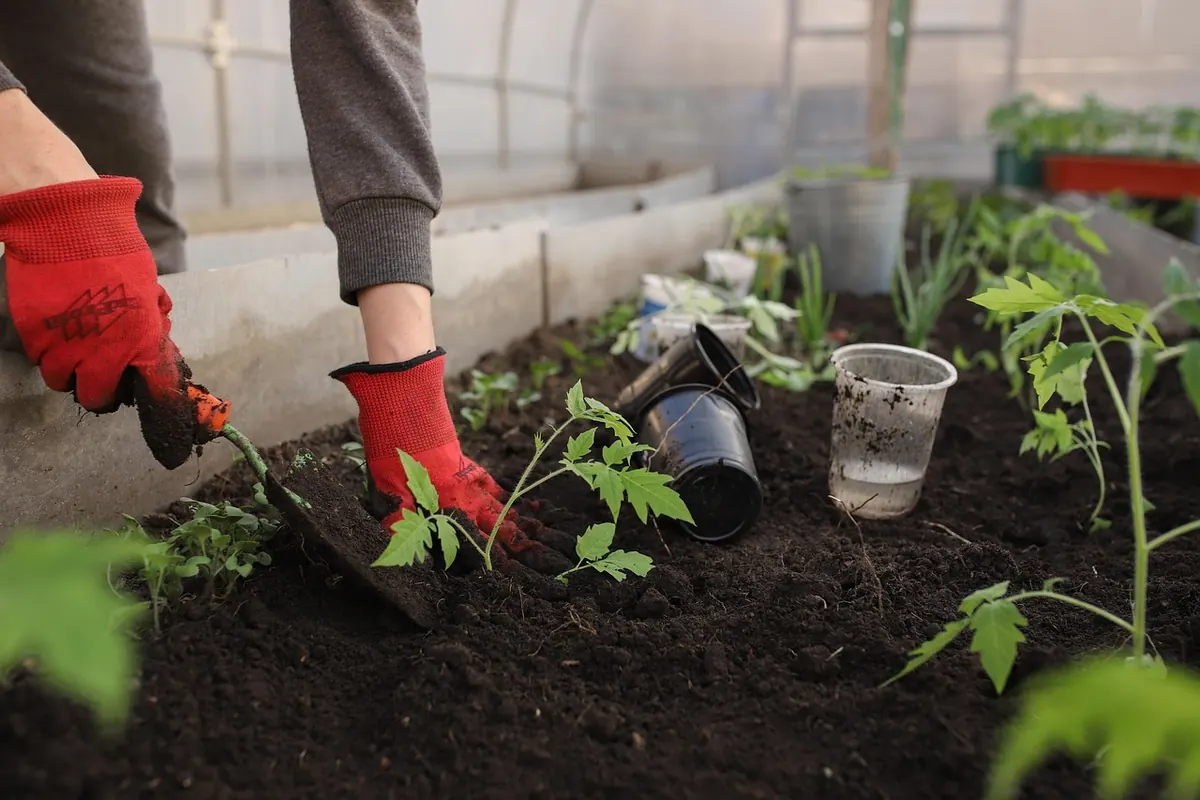
Most new vegetable growers start the same way. Fork over a patch of grass, pull out what roots you can, and hope for the best. By July the couch grass is back, the soil has baked hard, and the whole thing feels less like gardening and more like a losing argument. No-dig offers a way out. You smother what is there, feed the soil from above, and let the worms do the work.
What No-Dig Means in Practice
Instead of turning the soil each autumn or spring, you leave it alone and spread compost or well-rotted organic matter on the surface. Worms, fungi and soil bacteria pull that material down and open channels for air and water as they go. Nothing gets inverted, so the structure that builds up over a few seasons stays intact: dark, crumbly and full of life.
It suits British plots particularly well. Our damp, mild climate keeps soil organisms active for most of the year, and the heavy clay that curses so many gardens improves dramatically once it is left undisturbed and kept covered.
You will still do plenty of work. You will just be carrying compost and pulling weeds rather than digging, double-digging or rotavating. The bed is fed from the top, and the soil underneath sorts itself out.
What You Will Need
- Cardboard – plain brown, with tape and staples removed. Flattened delivery boxes are ideal.
- Compost or well-rotted manure – enough to cover the bed to a depth of 5–10cm. This is the one thing worth buying in bulk.
- A fork – for lifting the worst perennial weeds before you cover them, and very little else.
- Seeds, sets or young plants – plus labels, twine, a watering can and a kneeler or board to work from.
- Edging, optional – timber boards keep paths tidy and stop compost drifting into the lawn.
If you have a compost heap producing decent material, use it. If not, ask around local stables, allotment sites or garden centres. Anything labelled as soil conditioner will do, as long as it is well rotted and does not smell sour.
Building Your First Bed
Choose the site
Vegetables want sun. Aim for a spot that gets at least six hours of direct light in midsummer, away from the shade of fences, sheds and trees. Keep beds no wider than 1.2 metres so you can reach the middle from either side without ever stepping on the growing area.
Clear without digging
Cut tall growth down with shears or a strimmer and leave the cuttings in place. Annual weeds will die under cover. Perennials are a different matter: couch grass, dock, dandelion and ground elder will push straight through cardboard if they have enough root to draw on, so lift the worst crowns with a fork first. You are not trying to clear the plot completely, just taking the fight out of it.
Layer it up
- Lay cardboard over the whole area, overlapping the sheets by at least 15cm so there are no gaps for light.
- Soak it thoroughly with a hose or watering can. Wet cardboard moulds to the ground and stays put in wind.
- Spread 5–10cm of compost or well-rotted manure over the top. This is your growing medium for year one.
- Water again and leave it a fortnight if you can. Worms will already be moving up into the compost.
Plant straight into that layer when you are ready. There is no need to wait for the cardboard to break down.
What to Plant in Year One
Year one is not the year for carrots. Root crops twist and fork when they meet a change in texture, and the compost layer sits on top of something quite different. Start with leafy, hungry plants and anything you can raise as a sturdy young plant before it goes outside.
Good first-season crops
- Courgettes, pumpkins and squashes, which sprawl happily over the mulch
- Salad leaves, rocket and spinach, sown in short rows every few weeks
- Chard, kale and other brassicas, planted out once they are strong
- Runner, French and broad beans, grown up canes or a simple wigwam
- Leeks and onion sets, pushed into the compost with a dibber
- Tomatoes in a warm, sheltered corner, and herbs along the edges
Better left until later
Carrots, parsnips and long beetroot improve once the bed has settled for a season or two. Potatoes grow perfectly well, but lifting them churns up the soil you have spent a year improving, so containers or bags are a kinder choice for now.
Feeding, Watering and Weeds
An undisturbed, mulched bed holds moisture far better than bare dug soil, which means less time with the watering can. When you do water, do it properly: a good soak once or twice a week beats a daily sprinkle, because it encourages roots downwards. Push a finger into the compost to check before you reach for the hose.
Feeding is mostly handled by the compost itself. Top the bed up each autumn with 2–5cm of well-rotted manure or garden compost, spread on the surface and left for the worms. Hungry crops in long-standing beds may want a liquid feed in midsummer. Never dig it in.
Weeds that blow in are simple: hoe them off while they are tiny, or pull them by hand after rain when the roots come away easily. Anything perennial that pushes up through the cardboard needs removing the moment you spot it, taking as much root as you can reach.
Four Mistakes to Avoid
- Skimping on compost. A dusting will not smother grass or feed a courgette. Measure the depth rather than guessing.
- Leaving gaps. Light through a seam in the cardboard means a stripe of weeds down the middle of your bed.
- Standing on the bed. Compaction undoes everything you are trying to build. Keep to the paths, even when reaching for that one last lettuce.
- Expecting a perfect first year. The first season is often the weediest and the least productive. It gets better from the second year onwards, and better again after that.
Start Small, and Start Now
One bed is enough to begin with. A single 1.2m by 2.5m patch, covered with cardboard and a decent layer of compost, will teach you more than any amount of planning. Autumn is a fine time to build it, letting the worms work through winter, but you can start in spring or early summer just as well and plant straight away.
Keep the paths clear, top up the compost once a year, and resist the urge to reach for the fork. Within two or three seasons you will have soil that holds water, drains freely and pulls easily apart in your hand. That is the whole point of no-dig, and it happens whether or not you ever dig again.
Photo: Katya_Ershova / Pixabay